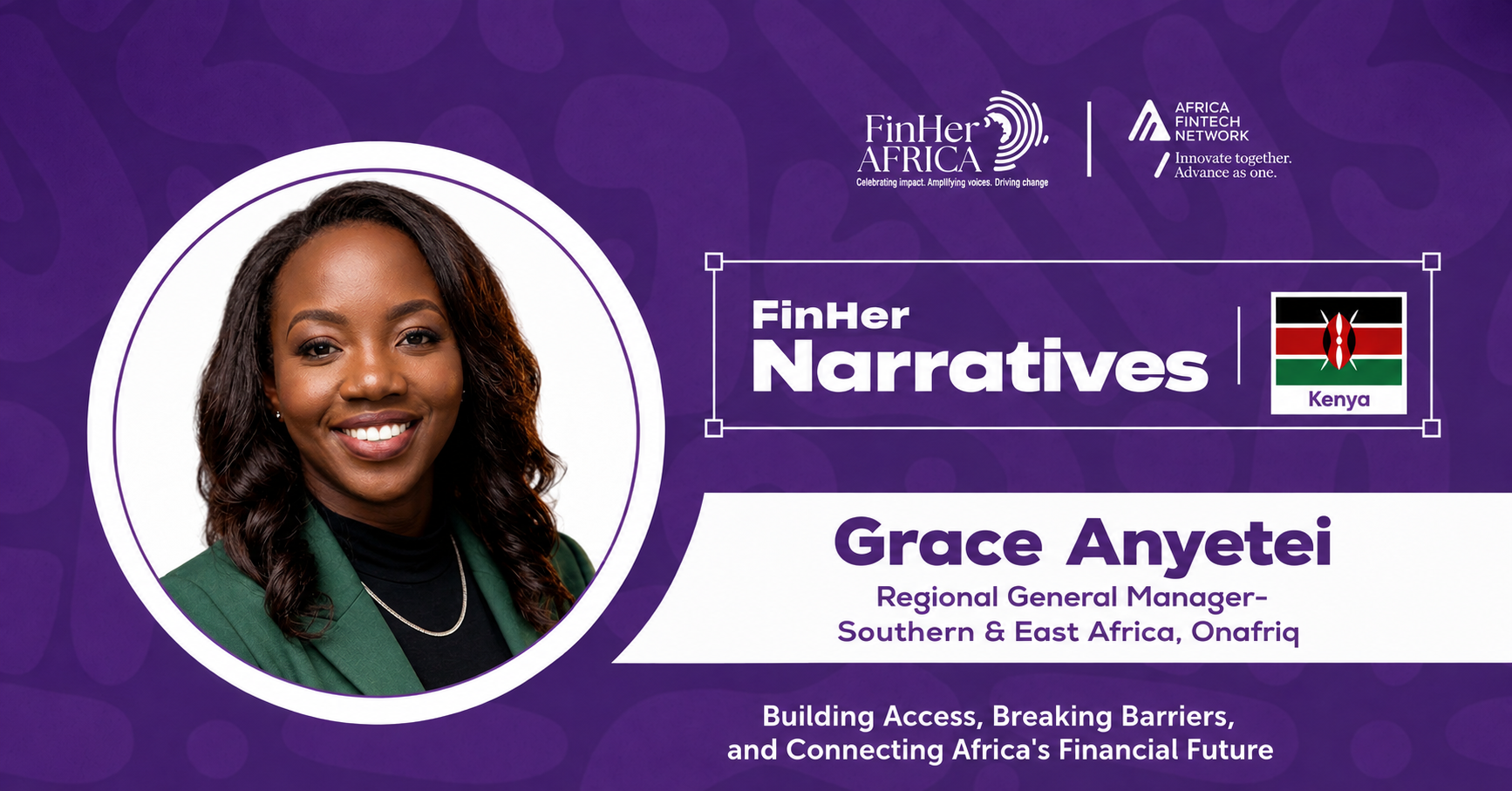
Grace Anyetei: Building Access, Breaking Barriers, and Connecting Africa’s Financial Future

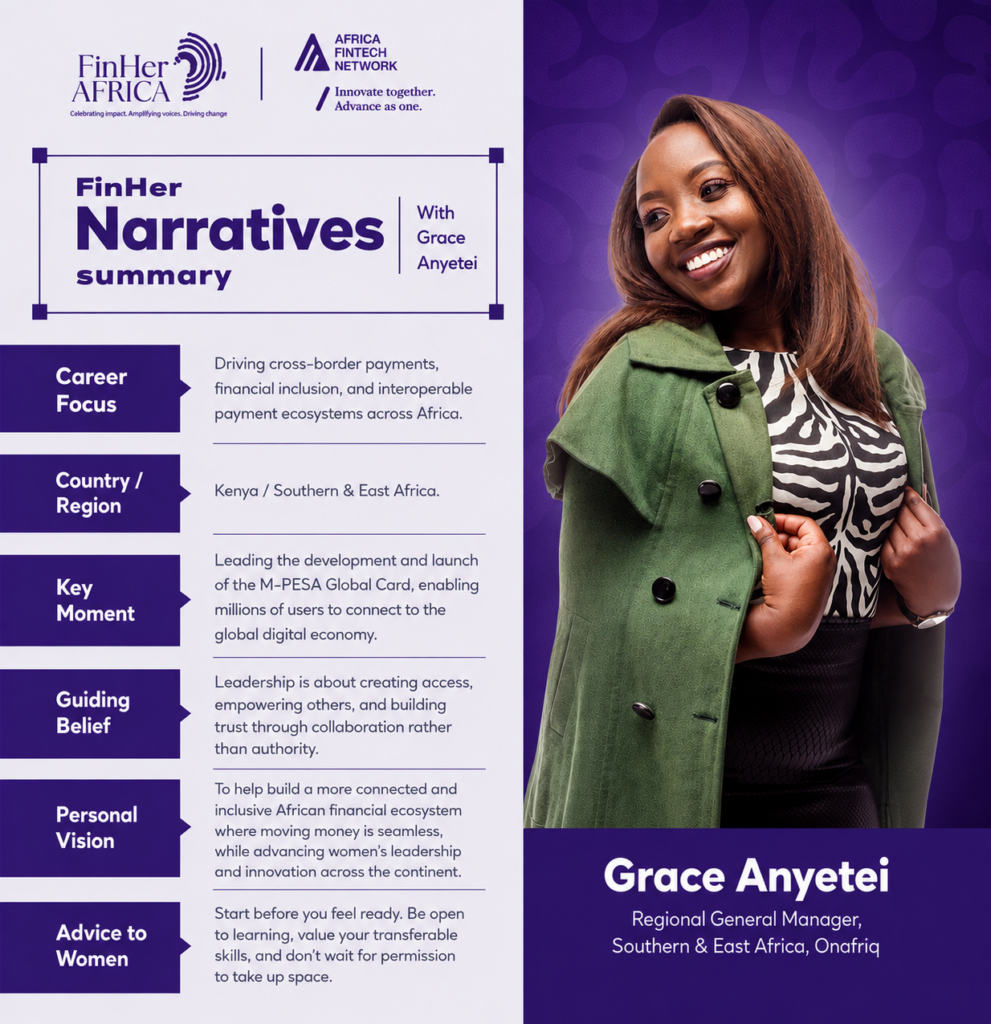
Spotlight Summary
Profile Overview
Grace Anyetei is a seasoned payments and fintech executive with over a decade of experience driving commercial growth, regional operations, and cross-border payment innovation across Africa. Currently serving as Regional General Manager for Southern & East Africa at Onafriq, she has built a career focused on expanding financial access, strengthening payment ecosystems, and enabling seamless movement of money across the continent. One of her most significant contributions was supporting the launch of the M-PESA Global Card, helping connect millions of mobile money users to the global digital economy.
Driven by a passion for financial inclusion and people-centred leadership, Grace believes that great leaders create opportunities for others to grow. She is a strong advocate for women’s advancement in fintech and is committed to building a more connected, inclusive financial ecosystem where more women have access to leadership, mentorship, funding, and visibility.
Experience
- Regional General Manager, Southern & East Africa – Onafriq (Current)
- Regional Commercial Director – Onafriq
- Regional Director of Operations, Africa – Boss Money Wallet – IDT Corporation
- Regional Director of Operations, Africa – Boss Money (formerly Leaf Global Fintech)
- New Business & Market Development Regional Lead, East Africa – Paymentology
- Client Services – East Africa – Paymentology
There is something remarkably fitting about Grace Anyetei’s career in payments. Her work has been defined by building bridges; between countries, financial systems, technologies, and ultimately, people.
As Regional General Manager for Southern & East Africa at Onafriq, Grace sits at the intersection of one of Africa’s most exciting transformations: creating a continent where moving money across borders becomes as seamless as sending a text message. Yet her journey into fintech was never part of a carefully crafted master plan. Instead, it was shaped by curiosity, adaptability, continuous learning, and an unwavering commitment to creating access.
Growing up in Kenya with Ghanaian roots, Grace describes her childhood as one filled with encouragement to explore different interests. The youngest of three children, she excelled in science and mathematics while nurturing a deep appreciation for literature and art.
“I was strong in sciences and mathematics but equally drawn to creative fields like art and literature. That balance between analytical thinking and creativity has shaped how I approach both my career and leadership today.”
That combination of analytical thinking and creativity would later become one of her greatest strengths, allowing her to navigate both the technical complexity of payments and the human side of leadership.
A Journey That Wasn’t Linear
Unlike many fintech executives who began their careers in finance or technology, Grace’s path was anything but conventional.
She initially studied architecture before moving into corporate project management and advertising. Those experiences exposed her to strategic thinking, client engagement, and solving business problems from different perspectives.
“My journey wasn’t linear. I initially studied architecture but transitioned into corporate project management and advertising. Over time, I moved into client account management roles, which led me into fintech. I brought with me transferable skills in problem-solving, stakeholder management, and simplifying complex ideas.”
For Grace, every chapter, even those that appeared unrelated became preparation for the next. Her transition into fintech wasn’t driven by chance alone. It was motivated by a bigger ambition.
“I wanted to work at a broader, more global level. I actively sought opportunities that would expose me to international markets. Once I entered the space, I became deeply interested in how financial systems work and how they can be improved to create more access.”
That pursuit of broader impact continues to define her work today.
Overcoming Self-Doubt
Despite the success that followed, Grace admits there was a period when confidence didn’t always come naturally. As she began leading cross-border initiatives and working with global stakeholders, she found herself battling imposter syndrome.
“One of my biggest challenges early on was imposter syndrome. I found myself managing large, cross-border projects and working with global stakeholders, and I questioned whether I truly belonged in those rooms.”
Rather than allowing doubt to limit her, she chose to learn. She immersed herself in the technical side of payments, deepened her understanding of financial systems, and gradually replaced uncertainty with expertise. That experience would later influence how she mentors others, encouraging people to trust that they belong, even before they feel completely ready.
Seeing Africa Through Payments
One of the defining experiences of Grace’s career came during her regional operations role at IDT Corporation. Working across multiple African markets gave her a front-row seat to the incredible diversity of the continent’s financial landscape. She witnessed mobile money dominance in East Africa, card-driven ecosystems elsewhere, and entirely different regulatory environments from one country to another.
Those experiences reshaped how she thought about scale. Rather than seeing Africa as one market, she came to appreciate it as a collection of unique ecosystems that require locally relevant solutions connected through interoperable infrastructure.
Building Financial Access Beyond Borders
Among the many initiatives Grace has contributed to, one stands above the rest. The development and launch of the M-PESA Global Card transformed how millions of Kenyans could participate in the global digital economy. By connecting mobile money users to global payment networks, the initiative extended financial access far beyond local transactions.
It was a complex undertaking that required collaboration between telecom operators, payment networks, regulators, and technology partners.
But for Grace, its greatest achievement wasn’t technical, it was human.
“I’m most proud of my contribution to enabling the M-PESA Global Card, because it fundamentally shifted access for millions of users.”
She continues:
“For me, that’s what fintech is about, creating access. Seeing how this kind of innovation can directly impact people’s ability to participate in the global economy is something I’m incredibly proud of.”
Leadership That Creates More Leaders
Grace’s leadership philosophy is refreshingly different. She doesn’t aspire to be the most knowledgeable person in every room. Instead, she measures success by how others grow because of her leadership.
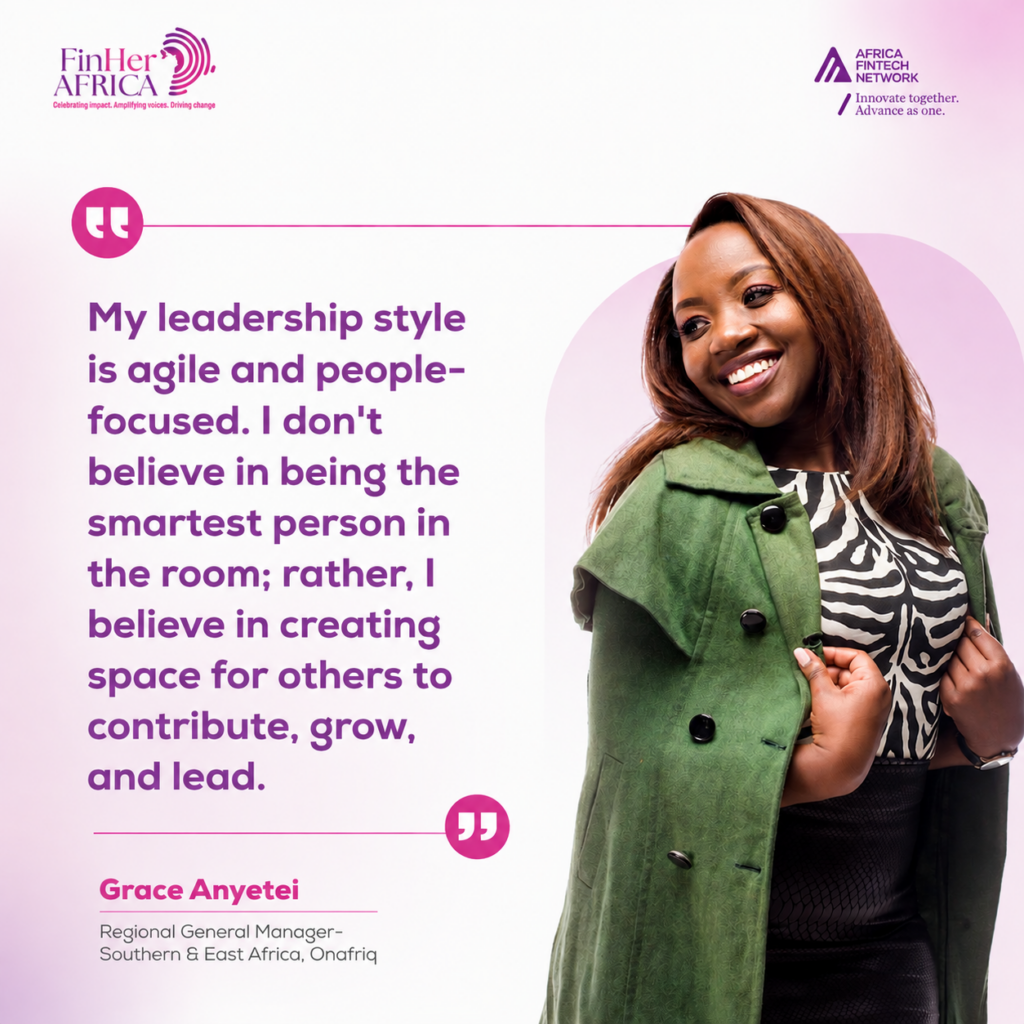
She is equally intentional about succession. To her, leadership means preparing others to eventually lead without you. The fast pace of fintech has also taught her another important lesson.
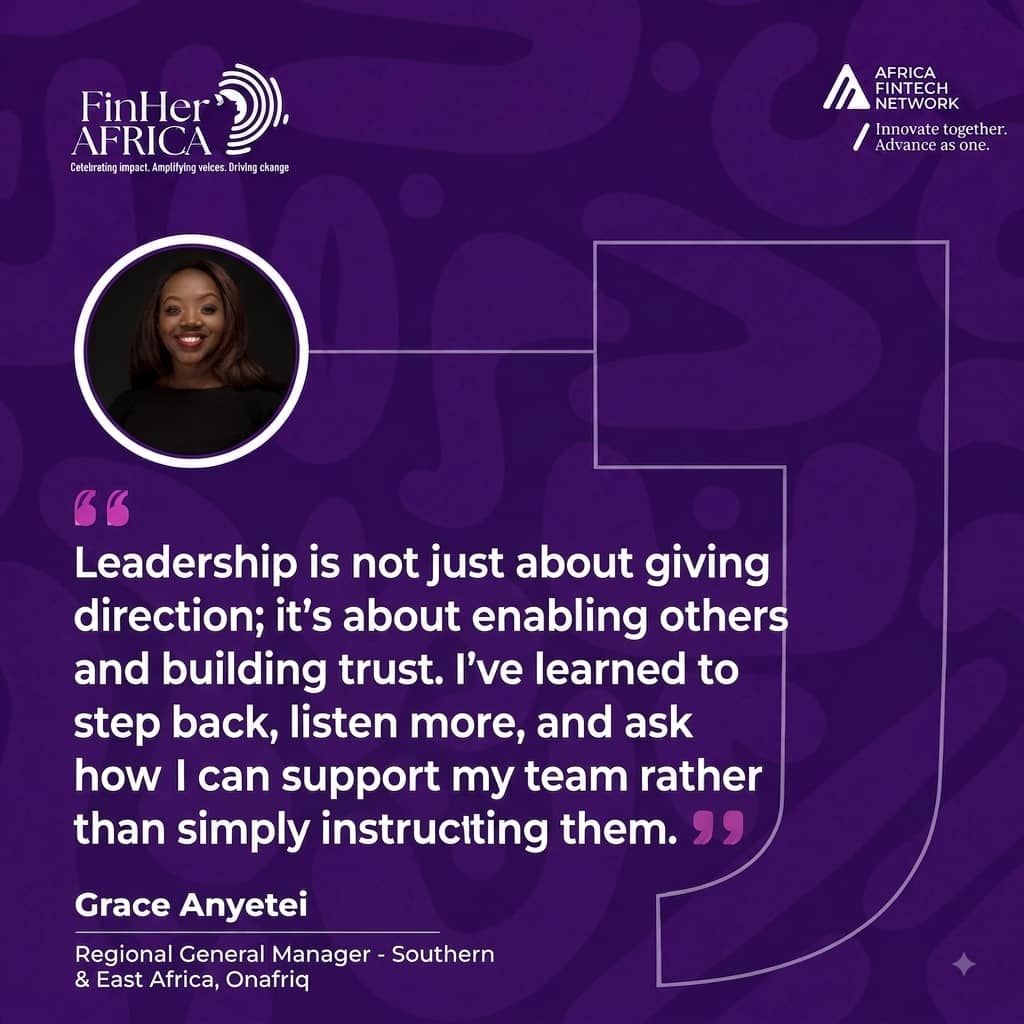
It is a philosophy rooted in wisdom, humility, influence, and service rather than hierarchy.
Africa’s Fintech Opportunity
Grace believes one of Africa’s greatest strengths is also one of its biggest challenges.
“Africa’s fintech space is incredibly diverse. There is no one-size-fits-all approach; each market has its own customer behavior, infrastructure, and regulatory environment.”
For innovators, that diversity demands collaboration, deep local understanding, and solutions tailored to each market’s realities. Looking ahead, she sees enormous opportunity.
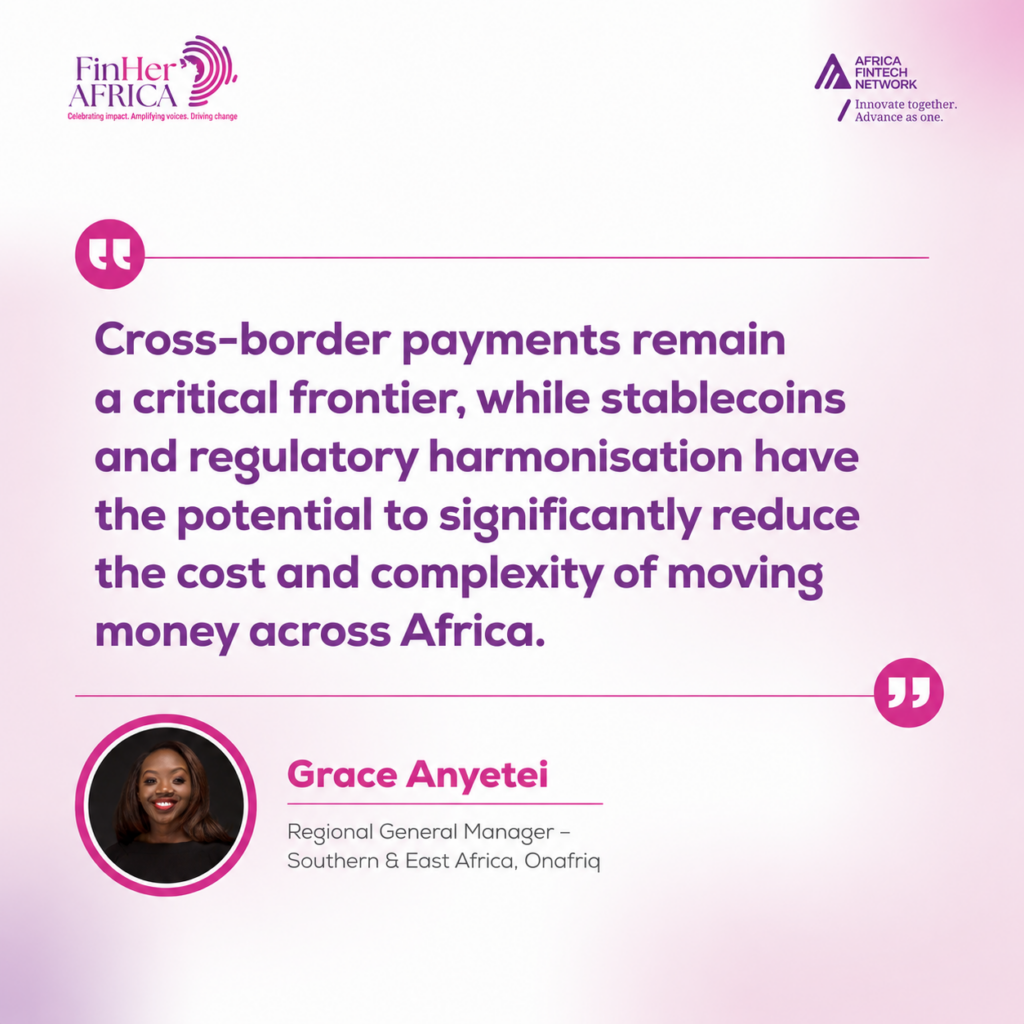
However, unlocking that future will require solving persistent challenges around fragmented infrastructure, differing regulations, and limited interoperability between markets. For Grace, technology alone isn’t enough. The future depends on regulation evolving alongside innovation, creating an environment where financial services become increasingly seamless without sacrificing trust.
Women Must Help Shape the Future
Grace is passionate about the role women will play in Africa’s financial future. While acknowledging that access to funding remains one of the biggest obstacles facing women entrepreneurs and leaders, she also believes confidence is equally important.
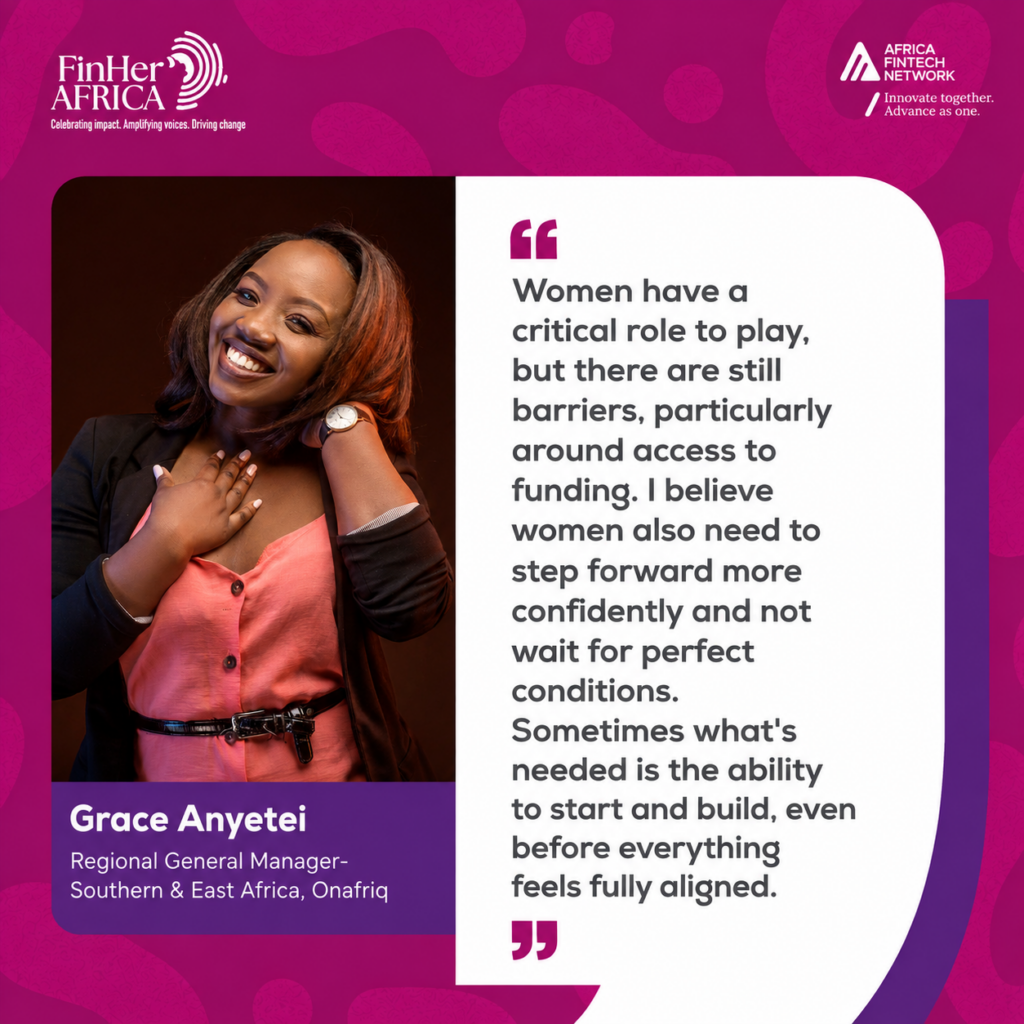
Creating greater representation, she argues, requires action from both institutions and individuals. Organizations must intentionally create opportunities, while women must be willing to seize them.
Staying Grounded
Behind every accomplished leader is a support system and a set of personal values. For Grace, balance doesn’t happen by accident.
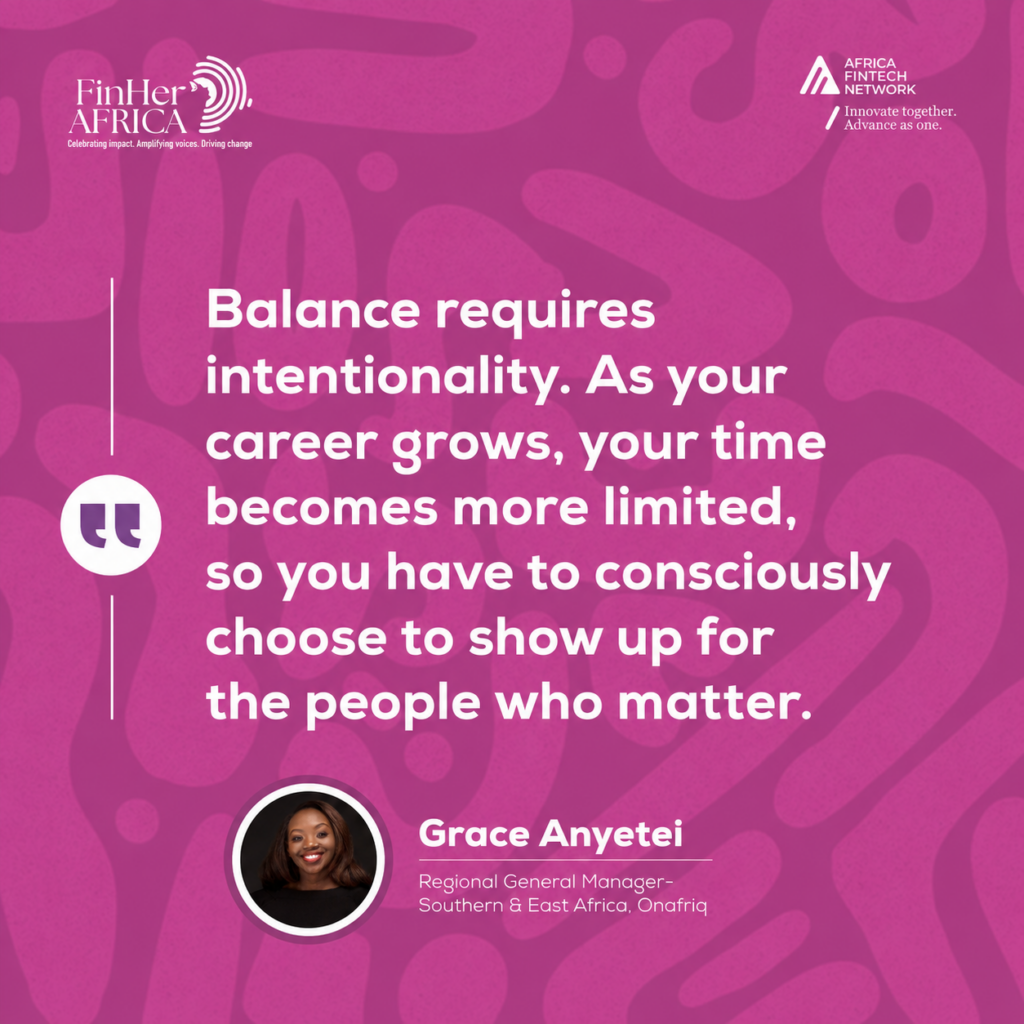
Her late mother remains one of her greatest influences, instilling discipline, integrity, and attention to detail. Professional mentors reinforced the importance of relationships and flawless execution, while her faith provides the foundation that keeps her grounded.
Outside work, staying active through the gym, tennis, and golf helps build the resilience and discipline needed to lead in a demanding industry.
A Vision Beyond Business
Grace’s aspirations extend far beyond commercial success. She envisions an Africa where financial systems are truly connected and where moving money across borders is no longer complicated or expensive. She also hopes to see many more women occupying leadership positions and driving innovation across the continent.
Ultimately, the legacy she wants to leave is one of access, not simply access to financial services, but access to opportunities, leadership, and possibility.
“I hope to leave a legacy of access, helping to break down barriers and make financial systems more inclusive. I also hope to inspire the next generation of women leaders to step into the space with confidence.”
Advice for the Next Generation
Grace’s advice to young women entering fintech reflects the lessons she has learned throughout her own journey.
“Start before you feel ready. Be open to learning and don’t underestimate the value of your transferable skills. Most importantly, don’t wait for permission to take up space.”
But encouraging more women to thrive requires more than inspirational advice. It requires systems that deliberately remove barriers.
“We need more intentional support systems, from funding opportunities to mentorship and visibility. At the same time, creating environments where women feel confident to step forward and lead is equally important.”
For Grace, the future of African fintech will not be built by technology alone, it will be built by ecosystems that invest in people- especially women, with the resources, visibility, networks, and confidence they need to lead.
And if there is one sentence that captures both her journey and the legacy she hopes to leave, it is the personal mantra she lives by:
“If you’ve been offered a seat at the table, take it, and use your voice to build something meaningful.”
Grace Anyetei’s story reminds us that leadership is rarely about following a straight path. It is about embracing every experience, remaining open to learning, creating opportunities for others, and using every seat at the table to make financial systems, and the people they serve; stronger, more connected, and more inclusive.