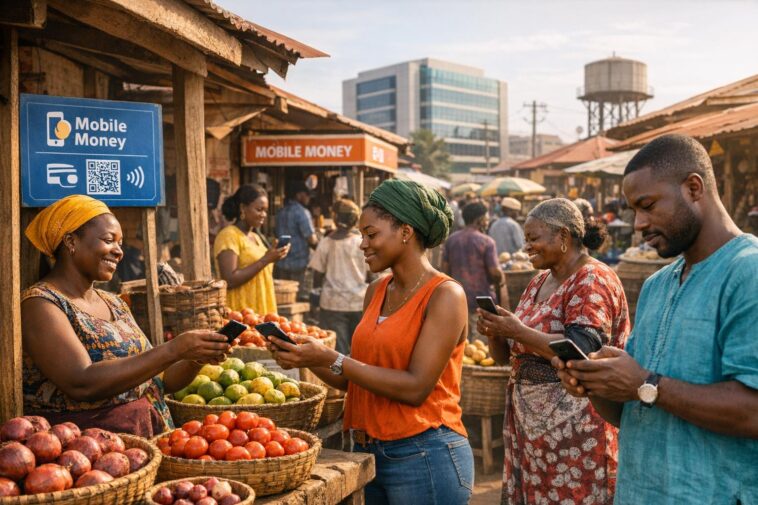
Mobile money is transforming economies in Africa, driving growth and expanding access to financial services. By 2022, 28% of adults in Sub-Saharan Africa had mobile money accounts, surpassing traditional banking in many regions. This shift has fueled GDP growth, reduced poverty, and connected millions to the formal economy.
Measuring Mobile Money’s Impact on GDP Growth
The numbers don’t lie – mobile money is playing a significant role in Africa’s economic growth. By the end of 2022, the adoption of mobile money services boosted the GDP of participating countries by 1.5%, contributing nearly $600 billion to their economies. Studies highlight that mobile money adoption has a direct, measurable effect on long-term economic growth in low- and middle-income countries, with benefits that persist over time. Let’s dive into the countries leading this transformation and how mobile money is amplifying economic progress.
Countries Leading Mobile Money Adoption
Some African nations are setting the pace for mobile money adoption, and the economic impact is undeniable. By integrating previously excluded individuals and businesses into the formal financial system, these countries are reducing transaction costs and providing access to credit for investments.
Kenya stands out as a trailblazer, with 79% of its population owning accounts, largely driven by mobile money services. Tanzania follows at 45%, and South Africa reports 37% adoption. Even more impressive, 20 out of 36 surveyed Sub-Saharan African economies boast mobile money account ownership rates of 30% or more, far exceeding the 13% average in other developing economies. Digital payment usage among account holders in Kenya and South Africa is also remarkably high, ranging from 95% to 98%. These widespread adoption rates are fueling the high transaction volumes that contribute significantly to economic growth.